A dead car battery is one of the most common reasons a vehicle won’t start. However, many drivers confuse battery failure with alternator problems or other electrical issues.
If you’re wondering how do you know if your car battery is dead, there are several simple and reliable tests you can do at home before calling a tow truck.
In this guide, you’ll learn the 5 foolproof ways to diagnose a dead battery and how to tell the difference between a bad battery and a failing alternator.
Why Car Batteries Fail
Car batteries naturally degrade over time due to:
- Heat and extreme temperatures
- Frequent short trips
- Leaving lights or electronics on
- Corrosion on terminals
- Normal aging (typically 3–5 years lifespan)
When a battery weakens, it struggles to hold or deliver enough charge to start the engine.
1. Slow or Struggling Engine Crank
One of the earliest signs of a weak or dead battery is a slow engine crank.
You may notice:
- Engine turns over slowly
- “Rrr… rrr…” sound when starting
- Delayed ignition
- Eventually no crank at all
If your engine struggles to turn, the battery may not have enough power to start the vehicle.
2. Clicking Sound When Turning the Key
A rapid clicking noise is a classic symptom of a dead or severely discharged battery.
This happens because:
- The battery doesn’t have enough power for the starter motor
- The relay tries to engage repeatedly
What you’ll hear:
- Fast clicking
- No engine turnover
- Dashboard lights may dim or flicker
This is one of the strongest indicators of battery failure.
3. Dim or Flickering Lights
Your car battery powers all electrical systems before the engine starts.
If the battery is weak, you may notice:
- Dim headlights
- Flickering interior lights
- Weak dashboard illumination
If lights are weak before starting the engine, the battery is likely discharged.
4. Electrical Systems Not Working Properly
A failing battery affects more than just starting the engine.
You might experience:
- Radio not turning on
- Power windows moving slowly
- Central locking issues
- Dashboard warning lights
When voltage is too low, electrical systems cannot function correctly.
5. Jump Start Works (But Only Temporarily)
If your car starts after a jump start but dies again shortly after, the battery is likely dead or unable to hold a charge.
This usually indicates:
- Battery failure
- Internal cell damage
- Severe discharge
- Possible alternator issues (in some cases)
A healthy battery should stay charged after a successful jump.
Battery vs Alternator: How to Tell the Difference
Many drivers confuse battery failure with alternator problems.
Likely Dead Battery:
- Car won’t start at all
- Jump start works temporarily
- Battery is older than 3–5 years
Likely Bad Alternator:
- Car starts but dies while driving
- Electrical systems fail while engine is running
- Battery keeps draining repeatedly
Quick Home Test (No Tools Needed)
Try this simple check:
- Turn on headlights
- Try starting the engine
- Watch light behavior
Results:
- Lights go very dim or shut off → likely dead battery
- Lights stay strong but car won’t start → possible starter issue
How Long Does a Car Battery Last?
Most car batteries last:
- 3 to 5 years on average
However, lifespan depends on:
- Climate (heat shortens battery life)
- Driving habits
- Electrical load
- Maintenance condition
Common Causes of Battery Drain
A battery may die early due to:
Leaving Lights On
Interior or headlights left overnight.
Short Trips
Battery doesn’t fully recharge.
Parasitic Drain
Electrical components drawing power when the car is off.
Extreme Weather
Heat and cold both reduce battery efficiency.
Frequently Asked Questions
Can a dead battery be recharged?
Yes, if it is not fully damaged. However, old or severely worn batteries usually need replacement.
How do I know if I need a new battery?
If your battery is over 3–5 years old and showing symptoms like slow cranking or frequent jump starts, replacement is likely needed.
Can I drive with a bad battery?
Only if the alternator is working properly. However, the car may stall once the battery loses charge.
What is the most accurate test?
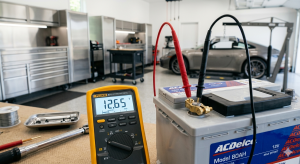
A professional load test is the most reliable way to confirm battery health.
Understanding how do you know if your car battery is dead can save you time, stress, and unnecessary towing costs. Slow cranking, clicking sounds, dim lights, and repeated jump-start failures are clear warning signs that your battery may be failing.
Running simple at-home tests can help you quickly identify whether the issue is the battery or something else—so you can take the right action before getting stranded.
Keeping up with routine vehicle maintenance is the key to maximizing performance, improving fuel efficiency, and avoiding costly repairs. Services like oil changes, brake inspections, fluid exchanges, and preventive maintenance help keep your vehicle safe and reliable for every mile ahead. At Kwik Lube Auto Care, drivers can count on fast, professional service designed to protect their investment and extend the life of their vehicle. Explore their full range of maintenance and repair solutions on the Kwik Lube Services page and keep your car running at its best.