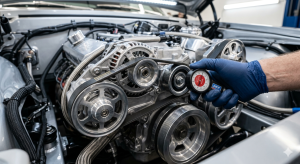
If you hear a high-pitched squealing noise when starting your car, it’s usually a sign that something under the hood is not working as it should. While it may seem harmless at first, this sound often indicates wear or tension issues in key engine components.
Ignoring a squealing noise can lead to bigger problems like belt failure, loss of power steering, or even engine overheating. In this guide, you’ll learn the 4 most common causes of a squealing car when starting and what each sound could mean.
Why Cars Squeal When Starting
Most squealing noises during startup are related to rubber belts or rotating engine components. When these parts are worn, loose, or contaminated, they slip under tension and create a loud, high-pitched sound.
Cold starts often make the problem more noticeable because belts are stiffer and engines need more initial force to turn.
1. Worn Serpentine Belt
One of the most common causes of a squealing sound is a worn serpentine belt.
This belt powers essential components like:
- Alternator
- Power steering pump
- Air conditioning compressor
- Water pump
When it becomes worn or glazed, it may slip when the engine starts.
Common signs include:
- Squealing only on startup
- Visible cracks or fraying on the belt
- Noise that improves after warming up
A worn belt should be replaced before it breaks completely.
2. Loose or Failing Belt Tensioner
The belt tensioner keeps the serpentine belt properly tight.
If it becomes weak or faulty, it can cause:
- Slipping belt
- Inconsistent tension
- Startup squealing noises
A failing tensioner often produces noise even if the belt looks fine.
Warning signs:
- Rattling near the engine
- Belt vibration
- Intermittent squealing
Replacing the tensioner early can prevent belt damage.
3. Cold Weather Belt Slip
Cold temperatures can temporarily cause belts to slip, especially if they are slightly worn.
This happens because:
- Rubber becomes less flexible in cold weather
- Moisture can reduce grip
- Engine oil or coolant leaks may contaminate the belt
In some cases, the noise disappears after a few minutes of driving—but it’s still a warning sign that wear is beginning.
4. Accessory Pulley or Bearing Issues
Squealing can also come from worn pulleys or bearings connected to engine accessories.
Common culprits include:
- Alternator pulley
- Idler pulley
- Power steering pump
- A/C compressor
When bearings wear out, they create friction and resistance, leading to a squealing or whining sound during startup.
Additional symptoms:
- Grinding or humming noise
- Belt misalignment
- Reduced accessory performance
When to Be Concerned About Squealing Noises
You should inspect your vehicle if:
- The noise happens every time you start the engine
- It gets louder over time
- It continues after the engine warms up
- You notice performance issues with steering or charging
Early diagnosis can prevent costly repairs.
Can You Drive With a Squealing Belt?
Short-term driving may be possible, but it is not recommended to ignore the issue. A failing belt or tensioner can break suddenly, causing:
- Loss of power steering
- Battery charging failure
- Engine overheating
What starts as a simple squeal can quickly turn into a breakdown.
How to Prevent Startup Squealing
To reduce the risk of engine belt noise:
- Inspect belts regularly for wear
- Replace belts at recommended intervals
- Check for fluid leaks near belts
- Replace worn tensioners and pulleys together
- Address noises early before they worsen
Preventive maintenance is key to avoiding sudden failures.
Frequently Asked Questions
Why does my car only squeal when starting?
Because the belt is under the most strain during engine startup, especially if it is worn or loose.
Will the squealing go away on its own?
Sometimes it may temporarily stop, but the underlying issue will usually get worse over time.
Is a squealing noise dangerous?
Yes, it can indicate belt or pulley failure, which may lead to engine or accessory system failure.
How much does it cost to fix a squealing belt?
Costs vary depending on whether you need a belt replacement, tensioner, or pulley repair, but early fixes are typically much cheaper than breakdown repairs.
A squealing car when starting is an early warning sign that your engine belt system or related components may be wearing out. Whether it’s a serpentine belt, tensioner, or pulley issue, addressing the problem early can prevent serious mechanical failures and expensive repairs.
If your car is making this sound consistently, it’s best to have it inspected before the issue worsens.
Keeping up with routine vehicle maintenance is the key to maximizing performance, improving fuel efficiency, and avoiding costly repairs. Services like oil changes, brake inspections, fluid exchanges, and preventive maintenance help keep your vehicle safe and reliable for every mile ahead. At Kwik Lube Auto Care, drivers can count on fast, professional service designed to protect their investment and extend the life of their vehicle. Explore their full range of maintenance and repair solutions on the Kwik Lube Services page and keep your car running at its best.